
Indoor LED Display Wall
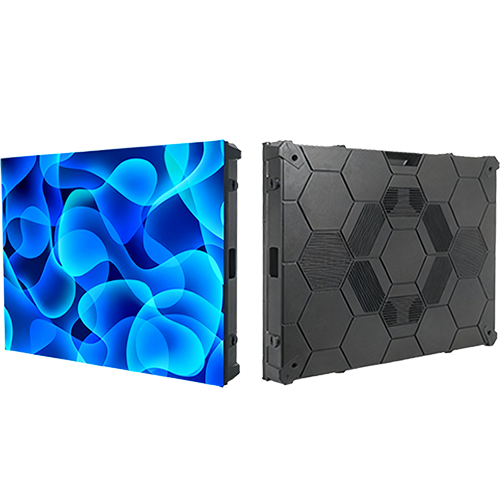
YV indoor LED Display Wall offers a perfect visual effect, high resolution, and high refresh rate, and it is easy to install in any indoor scenario.
Indoor LED Display Wall Introduction
YVLED offers a range of fixed Indoor LED Display Wall products suitable for shops, studios, conference rooms, hotels, churches, trade show centers, casinos, and other commercial venues. We always have suitable products to meet your demands.
Furthermore, we can provide customized solutions to meet your specific needs. Our high-quality Indoor LED Displays are designed for clear, vibrant visuals and reliable performance.
Indoor LED Display Wall Q&A List
Indoor LED Display Walls
They are commonly used in a variety of settings, including conference rooms, shopping malls, sports venues, hotels, and public places. Compared with traditional LCD displays, LED screens offer higher brightness, wider viewing angles, and clearer images. This makes them ideal for environments with varying lighting conditions, ensuring the content is clearly visible to viewers at varying distances.
Indoor LED Wall Screens
have high-definition resolution, with a pixel pitch usually P4mm or smaller. Common pixel pitches include P4, P3, P2.5, P2, P1.86, P1.56, P1.25, P0.93, etc.
Compared with traditional LCD displays, LED screens offer higher brightness, wider viewing angles, and clearer visuals. This makes them ideal for environments with varying lighting conditions, ensuring the content is clearly visible to viewers at varying distances.
2.1 High Resolution Screen
Indoor LED display walls usually have high pixel densities, such as P1.53, P2, P2.5, P3, and P4, so the screen displays a clearer, more detailed picture, suitable for close viewing.
2.2 Diversified Application Places
Indoor LED display walls are suitable for a wide variety of settings, including window displays, storefronts, shopping centers, retail stores, hotel lobbies, offices, and restaurants. They can be installed in almost any indoor environment.
2.3 Customized Screen and Size
YVLED supports customized LED screen walls to meet the unique needs of different customers. Whether for commercial advertising, exhibition displays, or special creative applications, YVLED can provide flexible solutions.
2.4 Easy Installation and Maintenance
Our Indoor LED display design is user-friendly and easy to install and maintain. All of our indoor LED display screens support full front installation and service.
An indoor LED display board has low brightness, usually between 600 and 1200 nits. High contrast, high color reproduction, excellent visual effect.
2.6 Cost-effective
YVLED indoor display wall series are cost-effective, reasonably priced, and with guaranteed after-sales service. We offer our customers high-standard LED displays at the most favorable price.
2.7 Creative installation
You can achieve creative installation through our indoor screen series, virtual production LED wall, and curved LED screen. Our fine-pixel-pitch panels are lightweight and easy to install, supporting a range of innovative shapes and installation methods.
3.1 Brightness
Indoor: Because the indoor environment light is relatively stable, the brightness of the indoor LED screen is low, generally 800-3000 cd/m².
Outdoor: To remain clearly visible in the sun, the brightness of the outdoor LED display is usually higher, about 5000-12000 cd/m², or even higher, to ensure that the screen content is not submerged in direct sunlight.
3.2 Resolution and visual range
Indoor: In indoor environments, the distance between the audience and the display is relatively short, so the resolution of the indoor LED wall is relatively high, and the pixel spacing is small (such as P1.2mm, P1.5 mm). This ensures clear detail and a better viewing experience.
Outdoor: The viewing distance in outdoor environments is long, so the resolution of outdoor LED displays is relatively low, and the pixel spacing is large (such as P4 mm, P6 mm, P10 mm). The main purpose of these screens is to ensure that they are clearly visible even at a distance.
3.3 Protection performance
Indoor: Indoor LED Display Wall Screens do not require particularly strong protection and usually have a dust-proof design. The waterproof and dustproof grade is generally low.
Outdoor: Due to the need to withstand various weather conditions, outdoor LED displays are more resistant to water, dust, UV, and wind. Protection levels above IP65 are usually used to ensure the long-term stable operation of the screen.
3.4 Size and weight
Indoor: generally small, suitable for placing in indoor places, lightweight, and easier to install.
Outdoor: A larger size is usually required to cover a wider area, and due to higher protection performance requirements, outdoor LED screen displays are also heavier.
3.5 Energy consumption:
Indoor: Due to the low brightness, the energy consumption of indoor LED displays is relatively low. Over long periods, they are more energy-efficient, helping reduce operating costs.
Outdoor: Due to the need for higher brightness, the energy consumption of outdoor LED displays is usually higher, especially during the day when the sun is strong, and the screen needs additional power to maintain clarity.
3.6 Installation and maintenance
Indoor: Installation of an indoor LED Display board is relatively easy, and maintenance frequency is low. Due to the relatively stable environment, the screen has a long service life and low maintenance costs.
Outdoor: Installation of LED display screens is usually more complex, as it must account for wind, temperature fluctuations, humidity, and other factors. Maintenance is relatively difficult. To ensure long-term stable operation, regular cleaning, protective coating, and replacement of certain components may be required.
The main differences between indoor and outdoor LED displays are their design, brightness, protection, and suitability for different environments. When choosing the right type of LED display, in addition to considering the use case, it is also necessary to determine the best choice based on specific needs for brightness, resolution, display effect, and so on.
Main Important Components Affecting Indoor LED Display Price.
4.1 LED Lamp
As the most important raw materials for LED displays, the impact on prices comes from pixels, lamp sizes (types), and brands.
Common LED lamp brands on the market today include Nationstar, Kinglight, Ruisheng, Sanan, Nichia, Epistar, and Cree.
As we know, the higher costs may mean more stable performance. But some more cost-effective brands have a larger market due to their cost competitiveness.
4.2 IC – Drive IC
There are different types of ICs used in LED displays, and the Drive IC accounts for about 90% of the total, so here we mainly discuss its impact on prices.
It supplies a compensating current to the LED. And it also has a direct impact on color uniformity, gray levy and refresh rate.
4.3 LED Power Supply
The power adapter is mainly used to provide the necessary operating current for the LED screen to operate normally.
The international voltage is 110V or 220V, but the working voltage for each LED display module is 5V, so we need a power supply that converts 110V or 220V to 5V.
We usually use 4 power supplies per square meter for our LED screen wall. The higher the power consumption of the LED display, the more power it requires, and the higher the price goes accordingly.
4.4 LED Display Cabinet
This factor primarily concerns the cabinet’s raw materials.
The biggest difference lies in the material density. For example, steel is 7.8g/cm³, Aluminum is 2.7g/cm³, Magnesium alloy is 1.8g/cm, and Die-casting aluminum is 2.7-2.84g/cm³. More and More LED wall panel cabinets are made of die-cast aluminum because it is light and strong, two important advantages for Indoor LED walls.
5.1 90° LED Display Series
YVLED supports customized 90° LED boards for a wide range of applications, including creative LED banners in shopping malls and other indoor creative applications. The curved LED wall features seamless splicing and can be assembled to form a curved surface by combining a standard flat LED screen with a 90° LED sign at the corner.
5.3 All-in-One Series
The All-in-One series integrates the functions of video communication, presentation display, collaborative whiteboard, and wireless projection. It is the representative of the new generation of LED screens. Due to the demand for close viewing, the indoor fixed LED wall becomes one of the best choices for an All-In-One LED board.
5.4 Virtual Production LED Display Wall Series
As a new technology for film and television in recent years, the virtual production LED display wall has received increasing attention. Due to the demand for fine pixel pitch, indoor LED screens are the logical choice for virtualization. This innovative and revolutionary concept combines XR (Extended Reality), state-of-the-art filmmaking technology, and LED display walls.
Hope the above content helps you learn about the many uses of the Indoor LED display wall. By understanding its application scenarios, features, pricing, and frequently asked questions, you can obtain high-quality indoor displays at a more favorable price! If you have additional related questions or would like a more competitive quote, please feel free to contact us!
Get The Best quote for your LED display project